


MAJIS detects activity from the interstellar object 3I/ATLAS

In November 2025, the ESA/Juice mission observed the interstellar comet 3I/ATLAS, a rare visitor from another stellar system. On this occasion, the MAJIS instrument detected emissions of water vapor and carbon dioxide, revealing strong cometary activity shortly after its closest approach to the Sun. These observations reflect the sublimation of ices buried beneath the surface, released due to solar heating. The outgassing rate, estimated at about 2 tonnes per second, indicates a particularly active process.
Despite challenging observing conditions (low signal and thermal constraints), MAJIS also detected weaker emissions in mid-November. The data, received only at the end of February 2026 due to the orbital configuration and spacecraft attitude preventing antenna pointing toward Earth, provided unique observations of this exceptional object.
Discovered in July 2025, 3I/ATLAS is only the third interstellar object identified passing through our Solar System. These results, combined with observations from JWST and major ground-based telescopes, open a unique window into the composition of material formed around another star billions of years ago.
They also demonstrate MAJIS’s capability to detect extremely faint signals, a key performance for future observations of tenuous environments such as the exospheres of icy moons and Jupiter’s rings.
The MAJIS instrument is an infrared imaging spectrometer designed in particular to characterize the surfaces and exospheres of Jupiter’s moons, as well as Jupiter’s atmosphere. The Institut d’Astrophysique Spatiale is responsible for the scientific and technical leadership of the instrument.
Contact at IAS: François Poulet
Links:
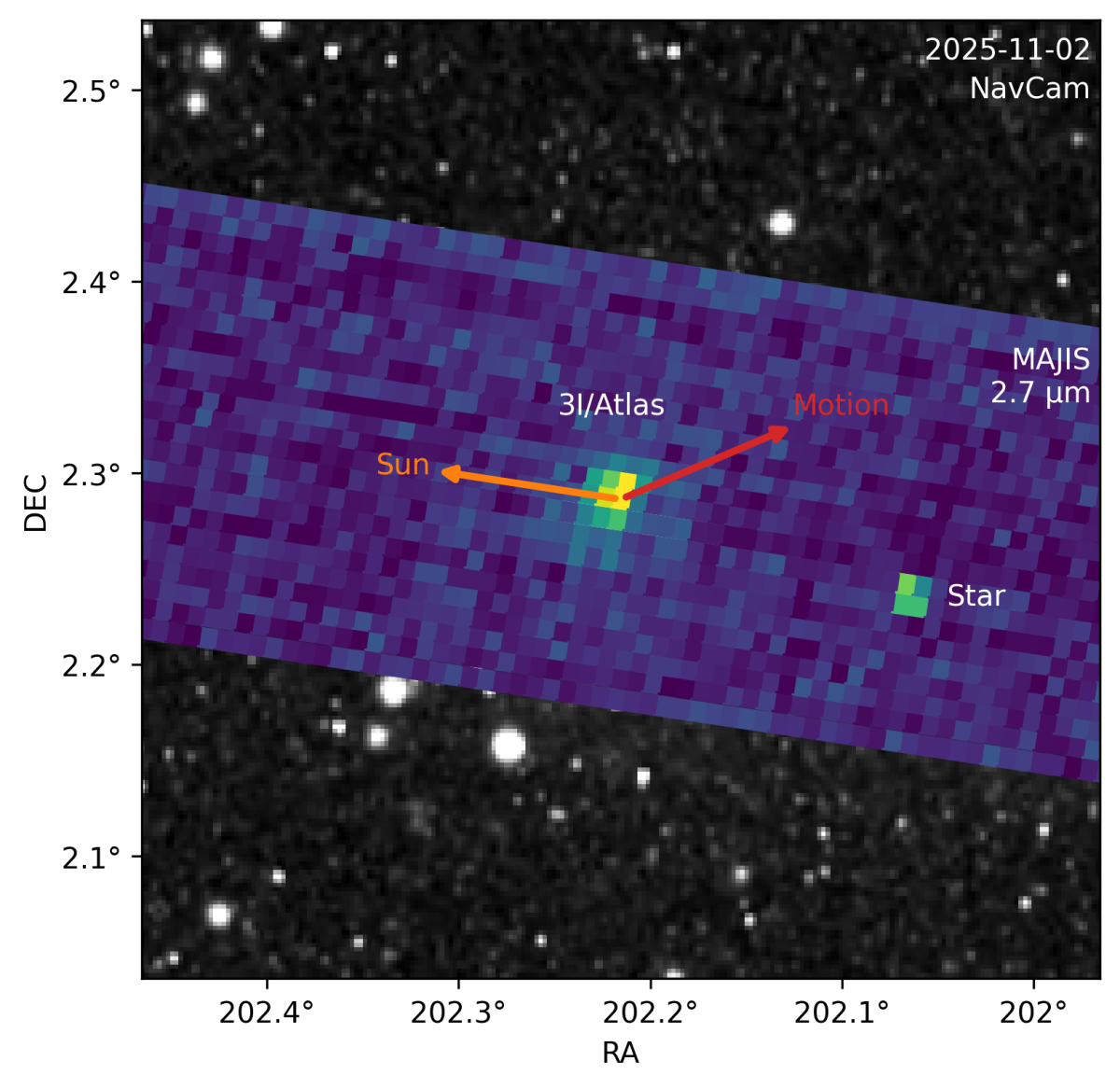
Image 1 : MAJIS observation of the comet overlaid on a NavCam/Juice image (02 Nov 2025)
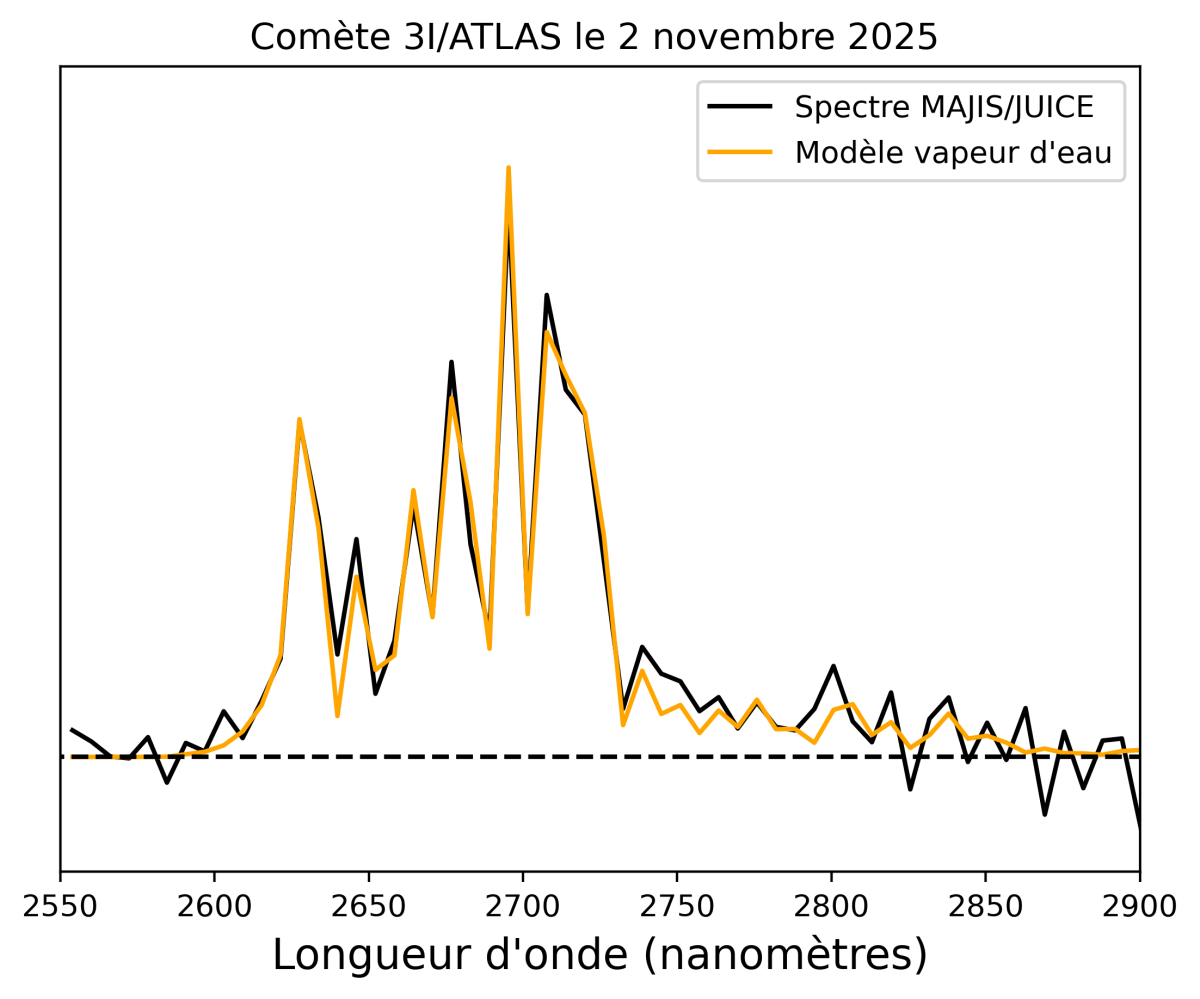
Image 2 : Comparison between the water vapor emission of the interstellar object (black) and a model (orange)
