
You are here

Solar and Planetary Systems
Image_page_presentation_30mai2025.png


The team conducts research on three themes:

    (1) Solid planets and satellites of the solar system

    (2) Asteroids and comets

    (3) Exoplanets


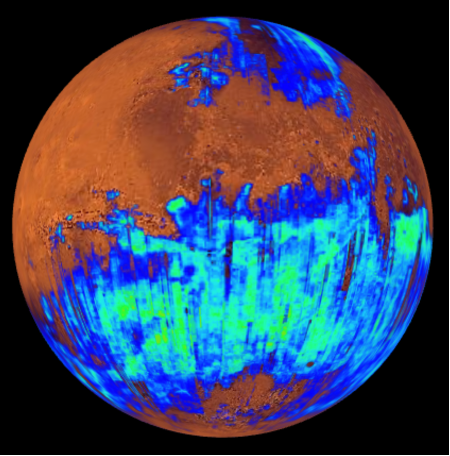
Using instruments aboard space missions, the team measures the composition of planetary surfaces and atmospheres.


The aim is to characterize the processes of physicochemical and climatic evolution in order to trace the history of the planets.


Particular attention is paid to water and carbon: where and in what state are they found in the Solar System today? What is their history, from primordial inputs to contemporary processes? What is Earth's place in the diversity of planets and exoplanets?


The team's recent research has focused in particular on Mars, water- and carbon-rich asteroids, the icy moons of Jupiter, Mercury and the atmospheres of exoplanets. The composition of these objects is studied using spectrometers and visible and infrared imagers.


Our approach combines observation, data analysis, numerical modeling and laboratory simulation. One of the team's distinguishing features is its direct involvement in the construction of numerous space instruments, with a constant concern to combine scientific and technological challenges. The team also works on microscopic analysis analysis of extraterrestrial samples, in close collaboration with the astrochemistry team.


Subscribe to Syndicate

Dernières news

4 days 20 hours ago

In November 2025, the ESA/Juice mission observed the interstellar comet 3I/ATLAS, a rare visitor from another stellar system. On this occasion, the MAJIS instrument detected emissions of water vapor and carbon dioxide, revealing strong cometary activity shortly after its closest approach to the Sun. These observations reflect the sublimation of ices buried beneath the surface, released due to solar heating. The outgassing rate, estimated at about 2 tonnes per second, indicates a particularly active process.

1 year 5 months ago

A study in which IAS participated has just revealed the presence of new molecules on the surface of Charon, Pluto's largest moon, thanks to observations from the James Webb Space Telescope (JWST). While a NASA mission, New Horizons, had already mapped this moon in 2015, recent observations by JWST have detected carbon dioxide and hydrogen peroxide on its surface for the first time, enriching our understanding of its chemical composition.

1 year 6 months ago

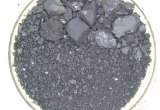
Hydrated Ammonium-Magnesium-Phosphorus-rich compounds (“HAMP”) have been discovered in the samples from the Ryugu asteroid. Embedded within an organic-rich phyllosilicate matrix, they may have been a key source of phosphorus and nitrogen necessary for the start of prebiotic chemistry on the primitive Earth.

1 year 10 months ago

Since December 2020, the near-infrared hyperspectral microscope MicrOmega, developed by IAS, took part in the analyzes of the samples returned from the carbonaceous asteroid Ryugu by the JAXA Hayabusa2 mission. Thanks to test campaigns, with IAS participation, this high-performance instrument is now ready to analyze samples from the Bennu asteroid, brought back by OSIRIS-REx.

Pages